
What is a Warehouse Management System? WMS Explained for Operations Teams
What a warehouse management system does between the docks, the five functions it owns, where it sits between ERP and TMS, and when a spreadsheet is honestly enough.
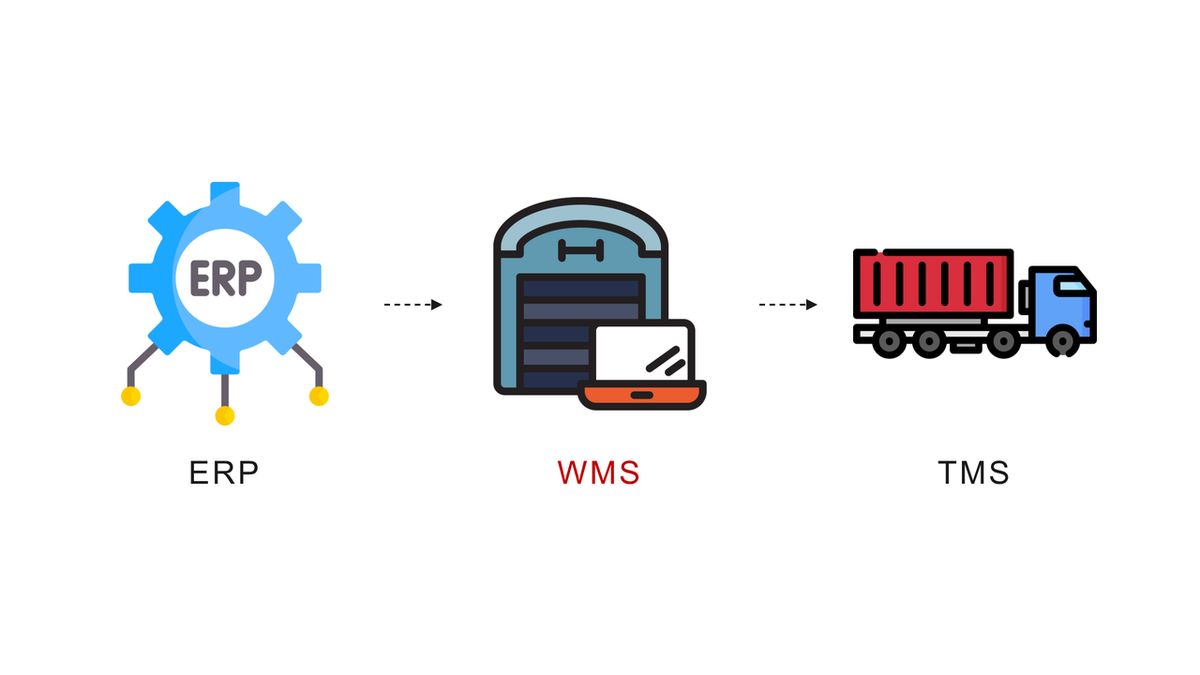
A warehouse management system, or WMS, is the software that knows where every pallet, carton and unit in a warehouse is, and tells the operators what to do with them next.
It receives the orders from the ERP, decides which location a pallet is put away in, builds the picking lists, confirms what was packed, and records the moment a shipment left the dock.
Every timestamp in a warehouse comes out of it, which is why the WMS is both the operational backbone of the building and the single most useful data source a supply chain analyst will ever be given.
I ran warehouse operations on top of several of them for years before I started building the analytics on their data, and most of what a WMS does is invisible until it stops.
In this article, I will explain what a WMS is and where it sits among the other systems, the five functions it owns, the data it produces, and when a spreadsheet is honestly enough.
The scenario: an order on its way to a store
Take a fashion retailer replenishing its stores from a regional distribution centre.
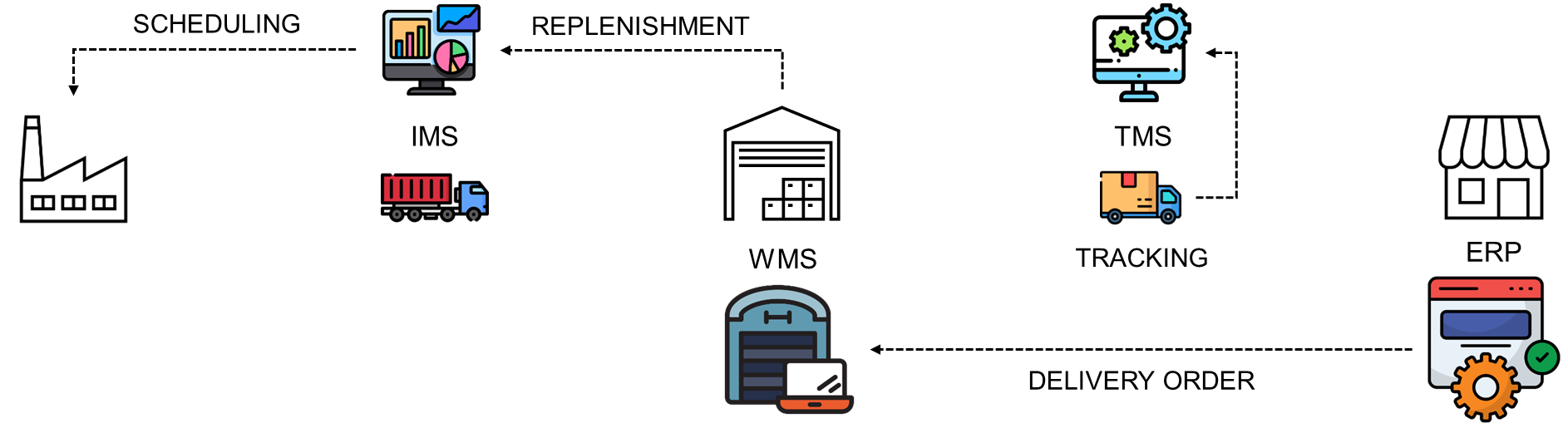
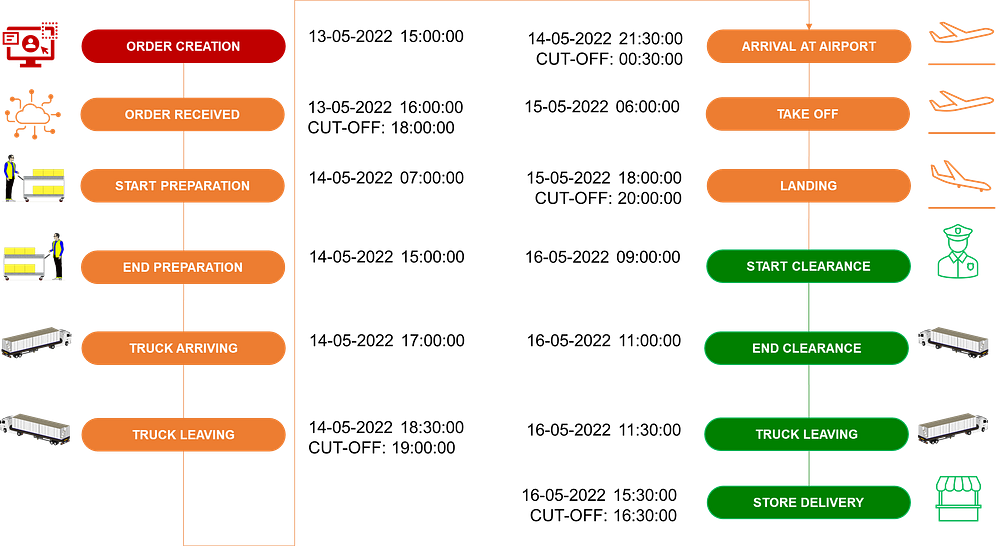
A planner enters a list of items with quantities, store codes and requested delivery dates in the ERP, and the ERP transmits that order to the WMS for preparation, packing and loading.
From that moment the WMS owns the order: it checks the stock, allocates the picking locations, builds a wave with the other orders leaving on the same truck, and hands the picking list to an operator.
When the last carton is confirmed and the pallet is loaded, the WMS records the departure, and the transport management system, the TMS, takes over for the journey.
That hand-over is where most late deliveries are born, because if the order is not received by the WMS before the cut-off, the warehouse team cannot start, whatever the truck schedule says.
Where the WMS sits among the other systems
Three systems share a supply chain, and confusing them is the commonest mistake I see in job descriptions.
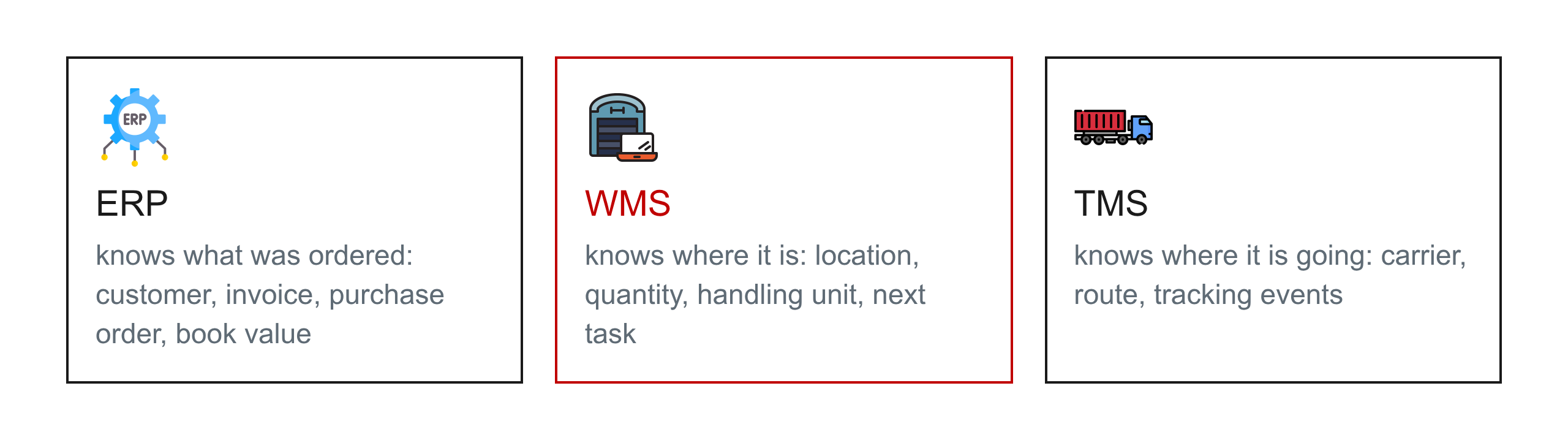
The ERP owns the commercial side: the customer, the order, the invoice, the purchase order to the supplier, and the inventory value in the books.
The WMS owns the physical side inside the building: which location holds which reference, in what quantity, in which handling unit, and what task each operator does next.
The TMS owns the journey: the carrier, the route, the truck, and the tracking events between the dock and the customer.
They talk to each other through messages, and in a retailer's chain those messages are often EDI: inbound shipment notices with SKU and quantity, putaway confirmations with the location, dispatch confirmations when the truck leaves.
The ERP knows what was ordered. The WMS knows where it is. The TMS knows where it is going.
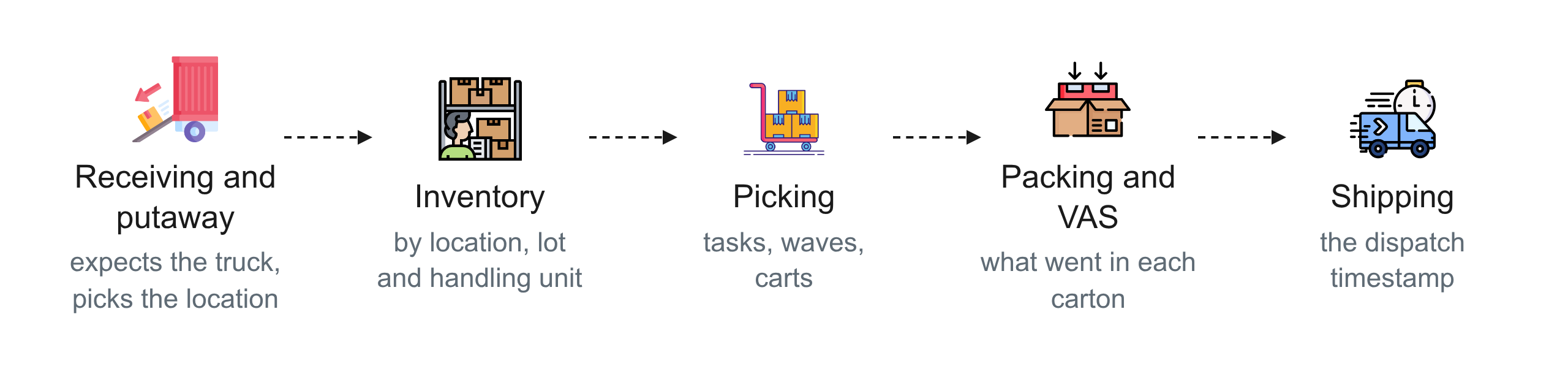
The five functions a WMS owns
1. Receiving and putaway
When a truck arrives, the WMS expects it, because the inbound shipment notice told it what was coming.
The operator scans the pallet, the WMS checks it against the purchase order, and then decides the putaway location.
A fast location near the packing area for a high-rotation reference, a slow one at the far end for the long tail.
That decision is where the Pareto principle for warehouse layout either lives in the system's rules or does not.
The inbound process is explained end to end in warehouse operations explained.
2. Inventory
The WMS holds the stock by location, by reference, by lot and by handling unit, and it is the only system that can answer "how many units of this reference are on shelf B-12-03 right now".
It also runs the cycle counts, which is the process where an operator checks a set of locations against the system, and the paper version of that process is what I replaced with a voice workflow.
3. Picking
The WMS turns orders into picking tasks: which locations, in which order, grouped into which wave, on which cart.
Most of the labour in a warehouse is spent here, and the walk between locations is 60% to 70% of an operator's picking time, which is why order batching and picking route optimisation are the analyses with the fastest payback.
Both of them start from the same export: the order lines, straight out of the WMS database.
4. Packing and value added services
The WMS records what went into each carton, prints the labels, and tracks the value added services applied, from security tags to gift wrapping, and the scheduling of those services is an optimisation that runs on its data.
5. Shipping
When the pallet is loaded, the WMS confirms the shipment, closes the order and sends the dispatch message to the ERP and the TMS.
The timestamp it writes at that moment is the one that decides whether the delivery was on time, and it is the last one the warehouse controls.
The data a WMS produces, and what it is worth
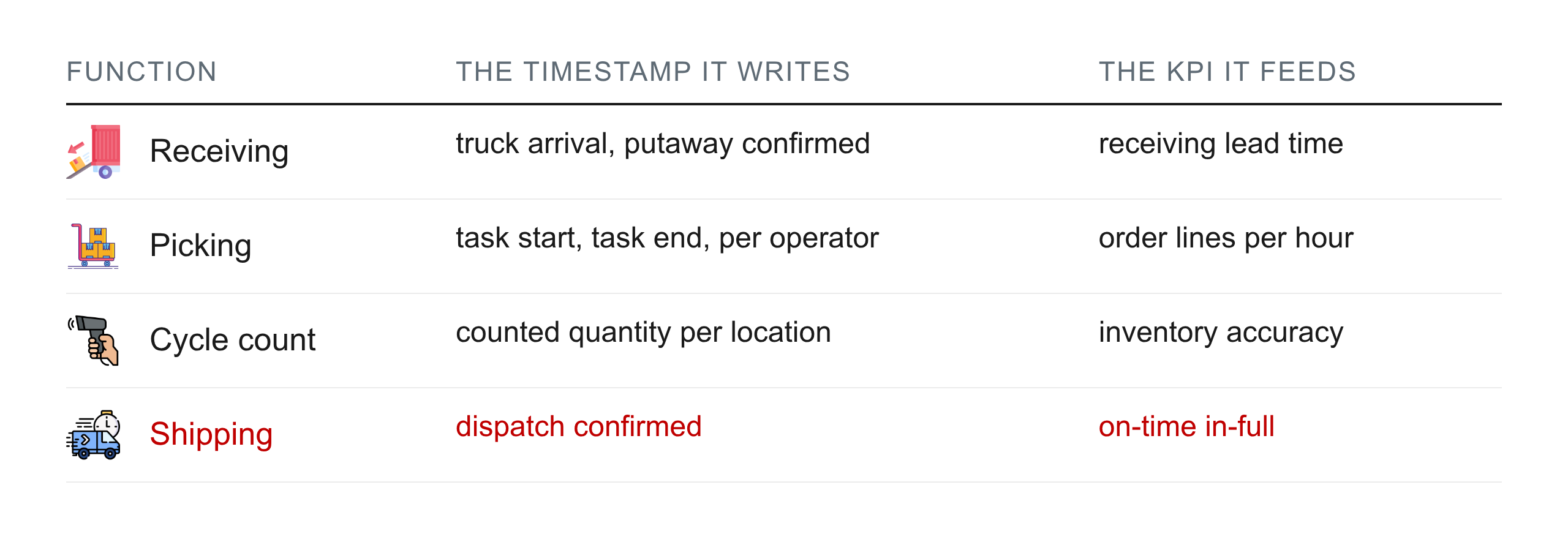
Every function above leaves a row with a timestamp, an operator, a location and a quantity, and that table is the raw material of warehouse analytics.
Productivity per operator, picking lines per hour, receiving lead time, cycle count accuracy, and the warehouse workload report a manager reads every morning all come from it.
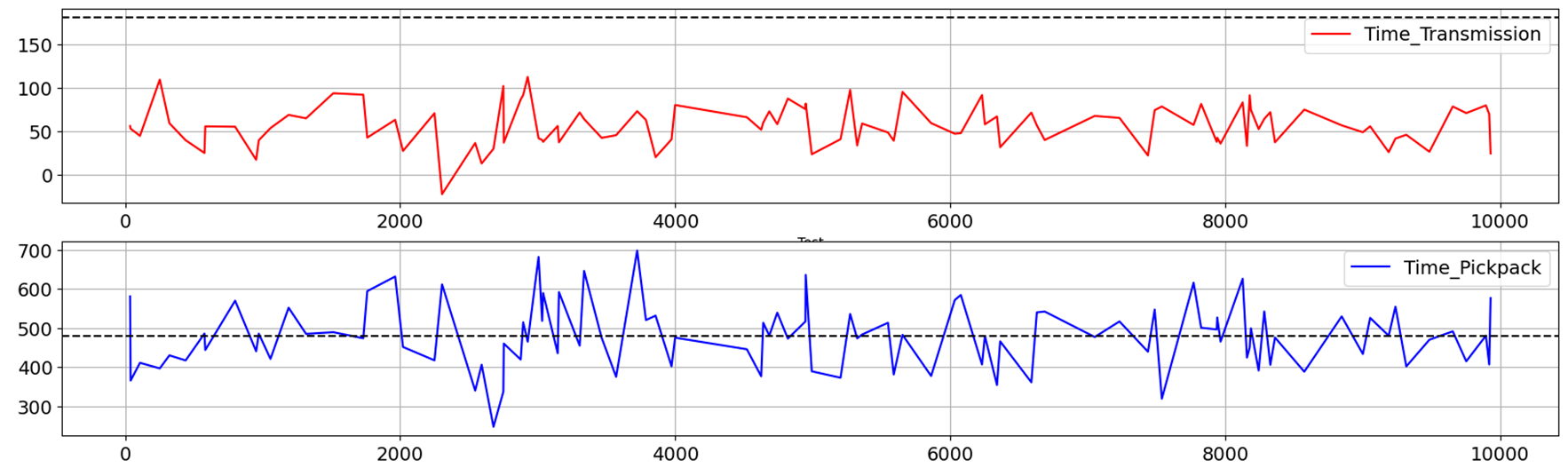
So does logistic performance management, because the on-time in-full measurement needs the WMS timestamp for transmission and for dispatch, and the data quality of those two fields decides whether the KPI can be trusted.
A warehouse without a WMS has no timestamps, and an operation without timestamps cannot be measured, only argued about.
When a spreadsheet is enough
Not every warehouse needs one, and I have seen operations run well without it.
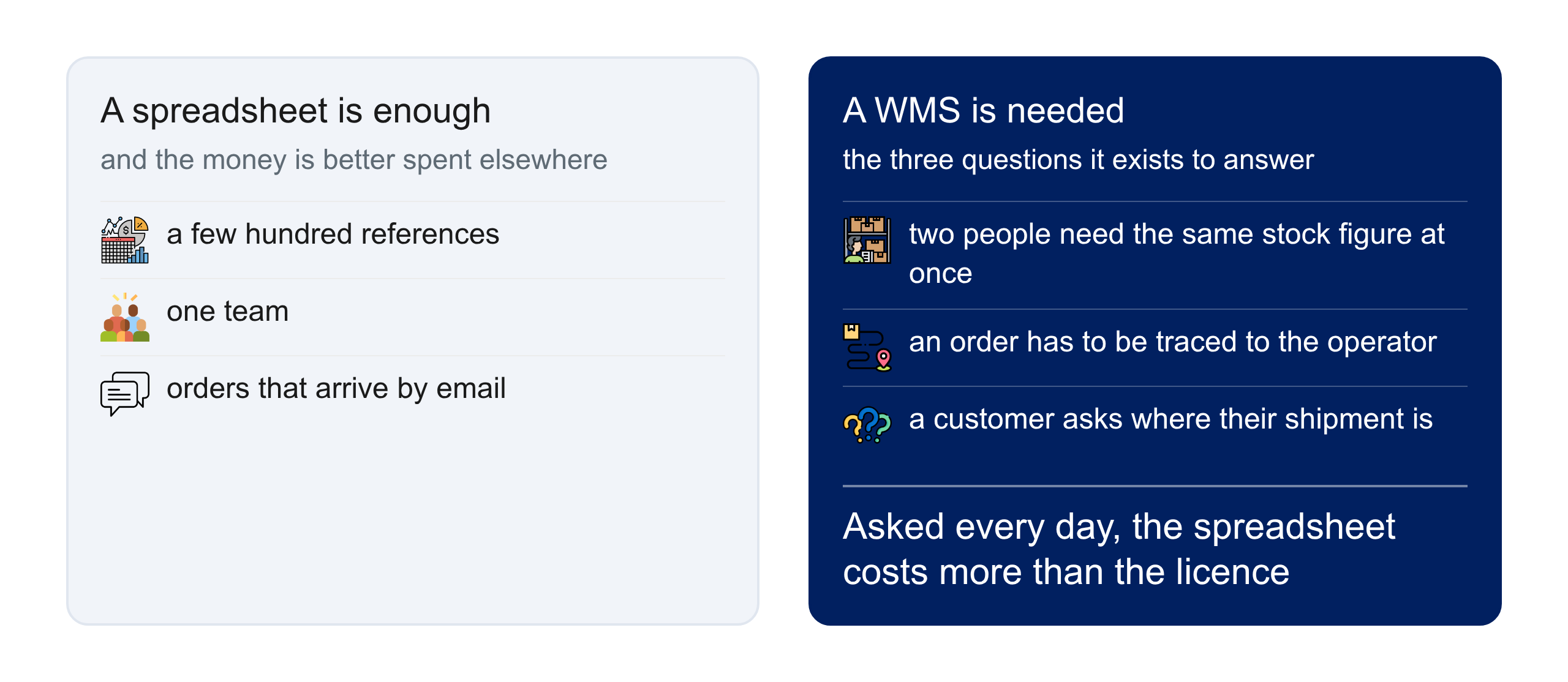
A site with a few hundred references, one team, and orders that arrive by email can hold its stock in a spreadsheet and its picking in a printed list, and the money is better spent elsewhere.
The moment it stops being enough is the moment two people need the same stock figure at the same time.
Or an order needs to be traced back to the operator who picked it, or a customer asks where their shipment is and nobody can say.
Those are the three questions a WMS exists to answer, and if your operation is asking them every day, the spreadsheet is costing more than the licence would.
Between the two there is a middle ground, which is the small automations built with n8n that give a low-tech operation timestamps and a shared stock figure without a full system.
Conclusion
A WMS is the system that knows where the goods are and what happens to them next, and the timestamps it writes on the way are what every warehouse analysis is made of.
What we covered in this article
Where the WMS sits between the ERP and the TMS, the five functions it owns from receiving to shipping, the data it produces, and the three questions that tell you whether you need one.
Where to go next
The processes the WMS orchestrates are explained one by one in warehouse operations explained, and the Supply Science App has quizzes on the inbound and picking processes if you want to test the vocabulary first.
Related videos
The videos behind this article, already on the channel:
- I Built a Warehouse App Without Writing the Front End
- Understand Warehouse KPIs: From Inbound to Outbound
- Master Data Management for Supply Chain
- Automate Warehouse Quantity Control
The ones coming next, with the date each goes public:
- Your AI Project Is Sitting on Five Systems That Don't Talk, 12 October 2026
- What Warehouse Receiving Is, 30 December 2026
- How Many Systems Does It Take to Run a Warehouse, 10 March 2027
- ERP, WMS, TMS: Where One Order Gets Lost, 17 March 2027
- What a WMS Actually Does, 24 March 2027
About Me
Let's connect on LinkedIn and Twitter. I am a Supply Chain Engineer who is using data analytics to improve logistics operations and reduce costs.