Sustainable Logistics - Reduce Warehouse Consumables
In this article, we will explore examples following several processes of warehouse management from product receiving to order shipments.
The logistics industry has been defensive or reactive on sustainability for too long.
It was seen as a major barrier to cost-reduction initiatives by operations managers facing profitability issues.
After six years of conducting reengineering and optimisation projects, I can see many analogies and converging points between cost reduction and sustainability initiatives.
In this article, we will explore examples following several processes of warehouse management, from product receiving to order shipments.
💌 New articles straight to your inbox for free: Newsletter
I. Problem Statement
Distribution Network for a Fashion Retail Company
II. Operational Examples in the Warehouse
Receiving Process
Pallet wrapping and Paperless Receiving
Order Preparation
Carton vs. piece picking, paperless picking, picking route optimization
Order Packing
Optimal packing, filling material
III. Conclusion
If you prefer watching, here is the video version of this article.
Distribution Network of a Fashion Retailer
Scenario
You are a logistics continuous improvement engineer at an international clothing group with stores worldwide.
The company produces garments, bags and accessories (including cosmetics) in factories located in Asia.
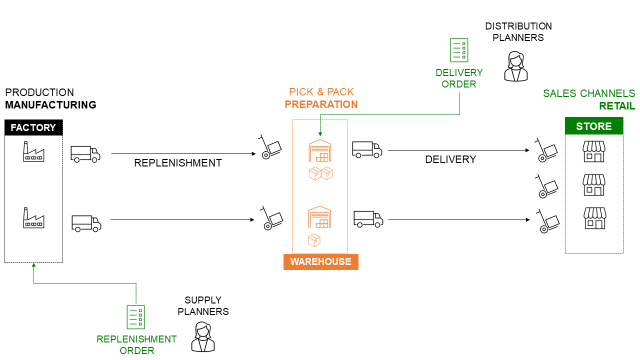
Stores are delivered from local warehouses and directly replenished by factories.
Problem Statement
You are starting a project to reduce the warehouse operations' footprint for store deliveries.
Your focus will mainly be on reducing the use of consumables and waste across the different warehousing processes.
Warehousing Processes & Consumables
In this section, we will understand how we can avoid using consumables to reduce the environmental impact of our operations.
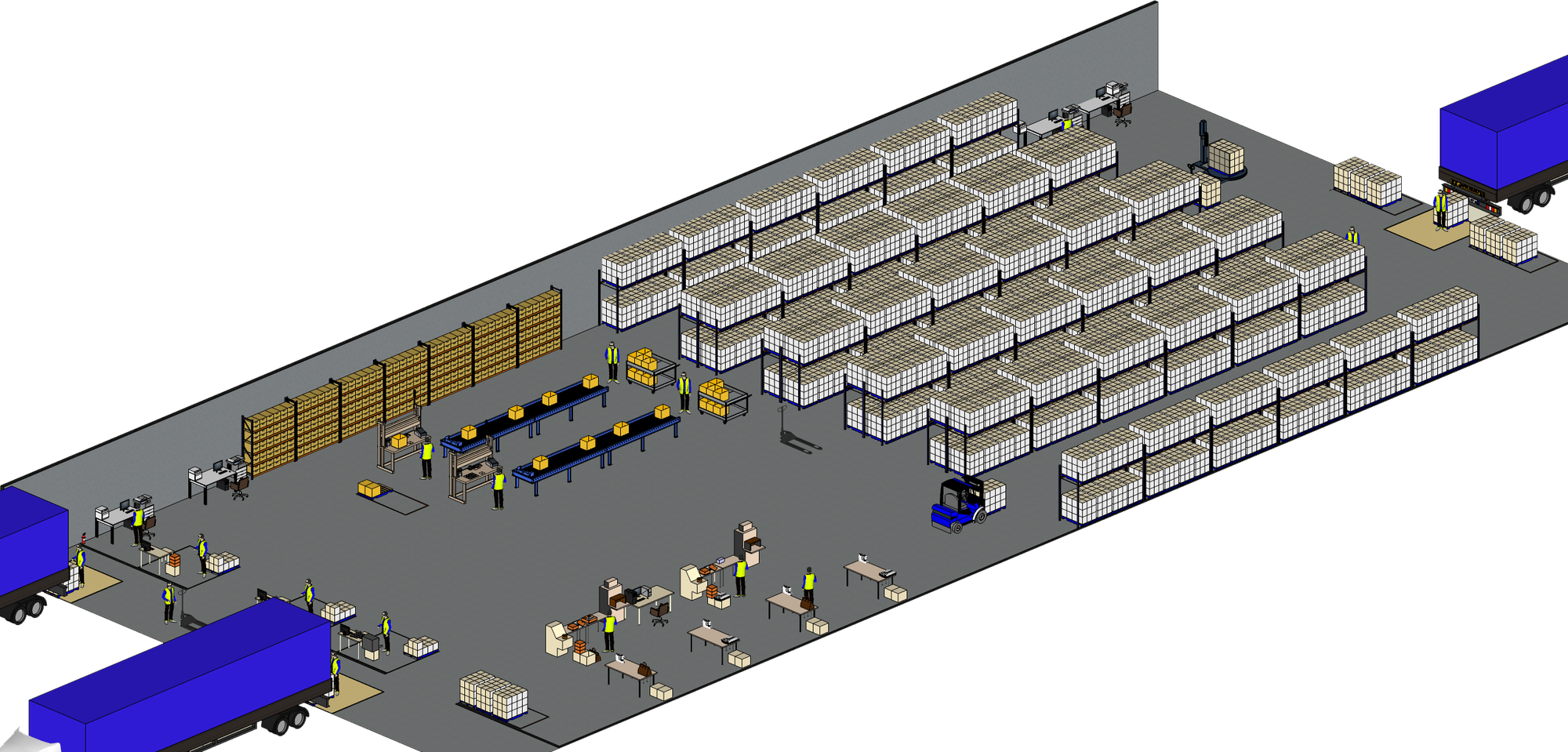
Our focus will be on reducing the usage of
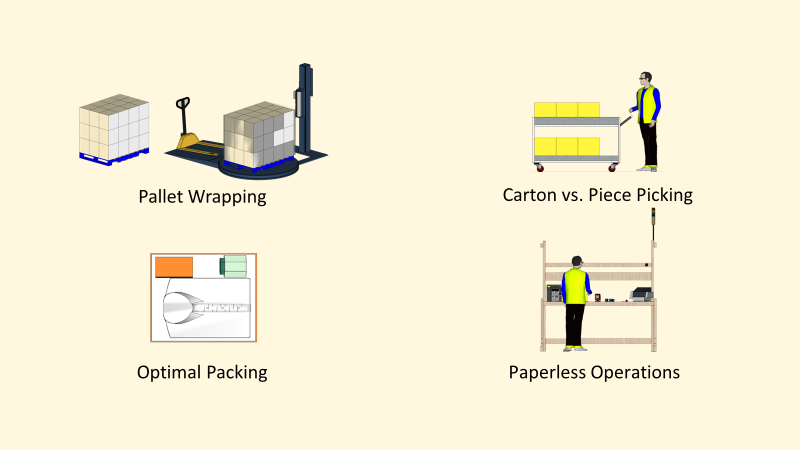
- Plastic film for pallet wrapping
- Paper for document printing
- Carton and filling material for order packing
Receiving
If warehouse inventory is too low, supply planners issue replenishment orders to the factories.
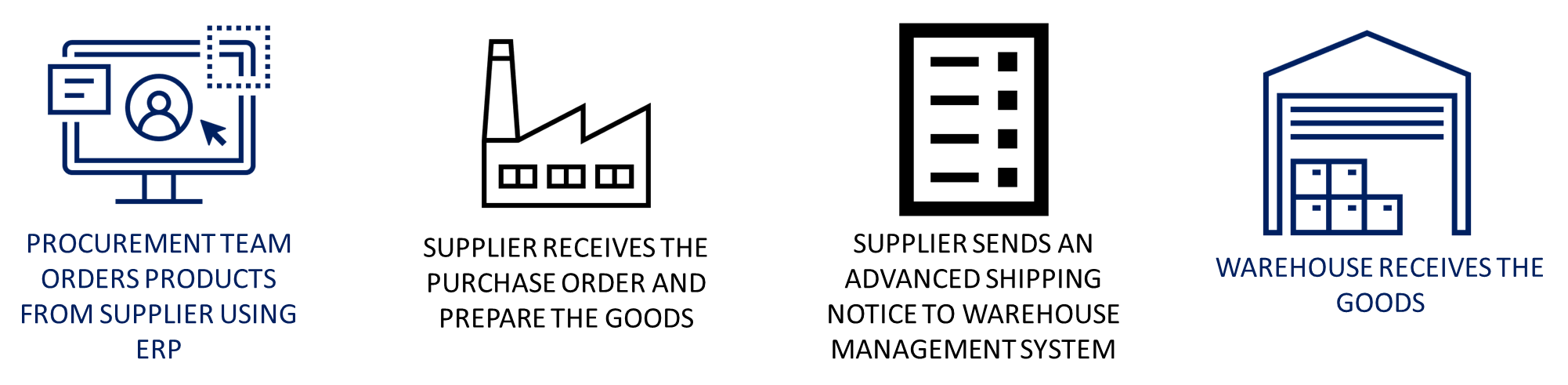
Transportation teams arrange shipments from the factories and inform the warehouse with an advanced shipment notice.

When the truck arrives, inbound teams organise the receiving of the pallets:
- Remove the wrapping film of heterogeneous pallets (different references in the same pallet) to separate the cartons by reference
- Print the receiving document from the WMS
- Check and enter carton quantities in the system using the receiving document
- Wrap the pallets and put them away to stock

- Pallet Wrapping: we can avoid removing the film if we ensure to receive homogeneous pallets that can be directly put in stock
- Paperless receiving: we can avoid printing receiving documents by using SSCC receiving process or RF equipment
Order Preparation
When a store needs replenishment, an order is received in the warehouse management process for preparation.
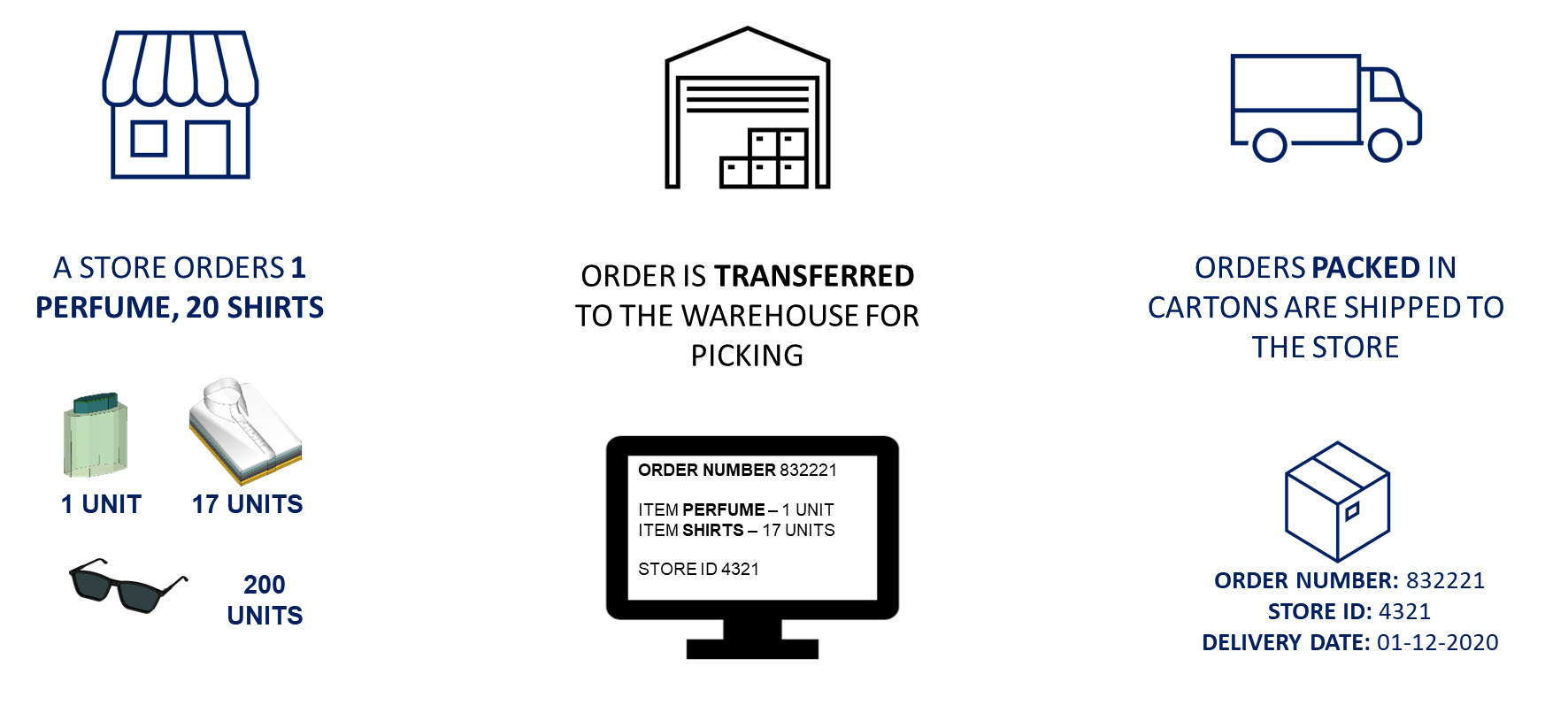
Picking Process
Warehouse preparation operators pick individual items from the storage area to satisfy stores' orders.
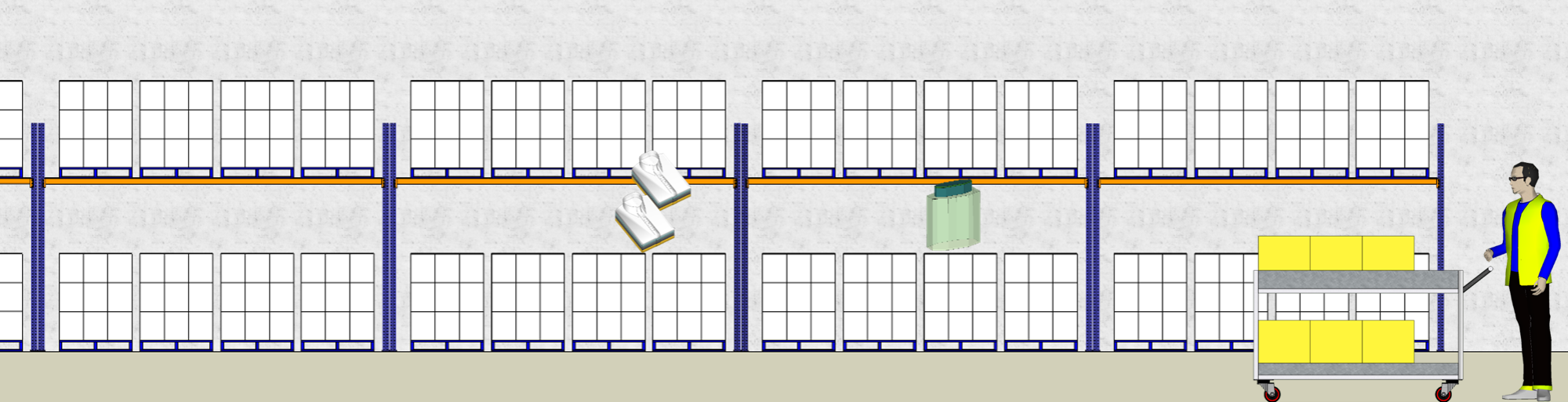
Optimiseinto Handling Units

The best scenario is when stores order full pallets, operators only need to take pallets from the stock and load them into the truck.
If your store is ordering units, you need to pack them in cartons with filling material.
If your stores are ordering by cartons or full pallets you avoid the packing process and reduce the consumption of filling material and cartons.
Order Packing
Pre-cubing for packing
After piece picking, picked units are transferred to the packing area.
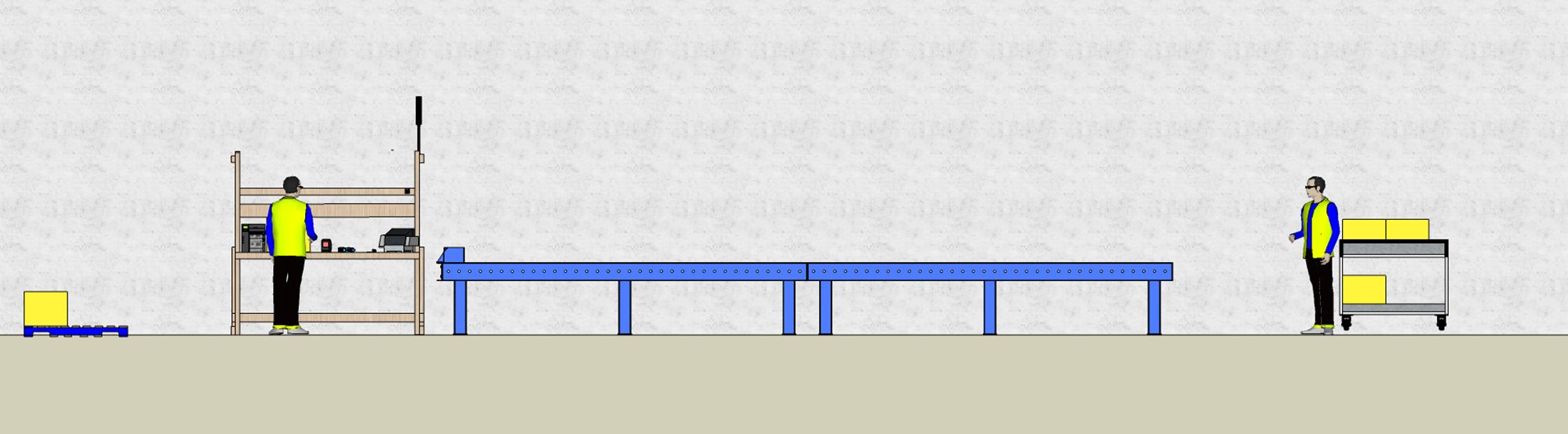
Individual items are packed in cartons and operators may add filling material to prevent shifting during the transportation and partially protect items inside.
Optimization algorithms can help you to estimate the right dimensions of the carton you need to pack your items.
Recycled Filling Material
To avoid additional waste, you can purchase equipment to recycle your used cartons to produce filling material.
Conclusion
All these initiatives align with efforts to reduce costs and achieve operational excellence.
You can adapt your continuous improvement methodologies to track consumable usage and identify alternatives that do not affect your productivity.
First, measure your operations' current consumption and environmental impact.
Data Analytics can help you automate this process; for more information, see the article below.
 Samir Saci
Where to go next
- Green Inventory Management for Fashion Retail - Case Study: Discover how to reduce the CO2 footprint of fashion retail logistics by optimising store replenishment policies.
- What is a Circular Economy?: How can you use Data Analytics to support a Fast Fashion Retailer to implement a Circular Economy?
- How Sustainable is Your Circular Economy?: Use Data Analytics to Simulate the Impact of a Circular Model on the CO2 Emissions and Water Usage of a Fast Fashion Retailer.
About Me
Let’s connect on LinkedIn and Twitter. I am a Supply Chain Engineer who is using data analytics to improve logistics operations and reduce costs.
If you’re looking for tailored consulting solutions to optimise your supply chain and meet sustainability goals, feel free to contact me.