
AI in Logistics: Where It Works Today, and the Three Places It Does Not
Four AI automations running in real logistics operations, what each replaced, the three reasons most logistics AI projects are cancelled, and the order to build in.
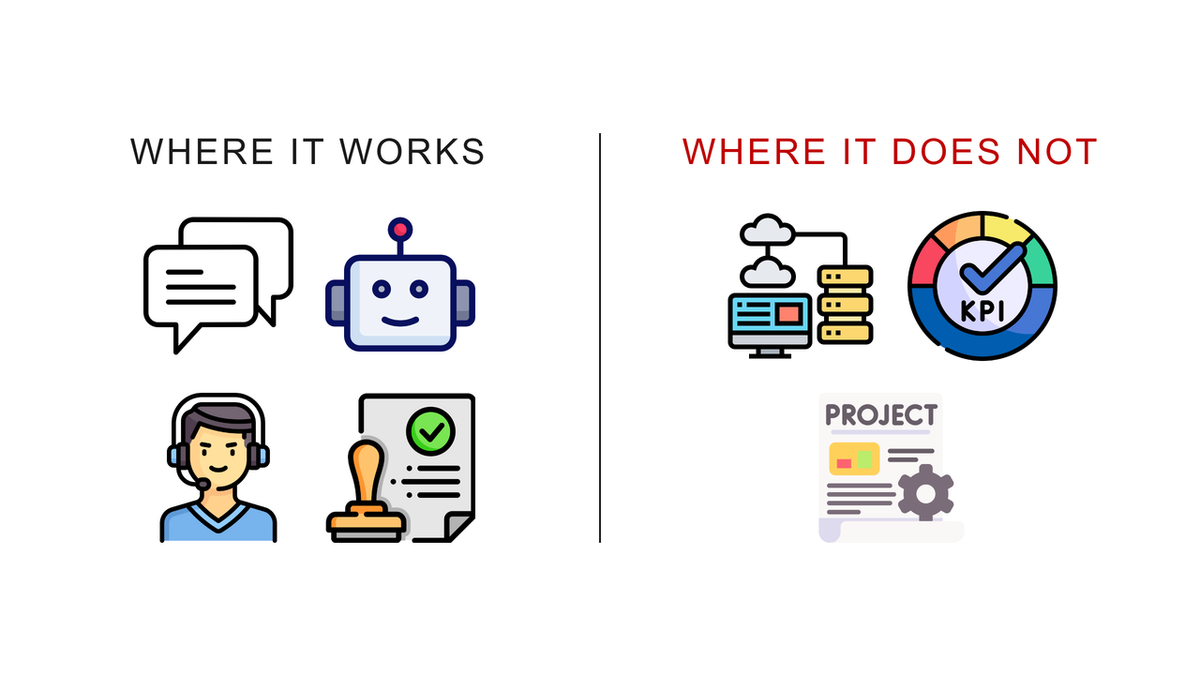
AI in logistics is sold as an agent that runs your operation, and deployed, when it survives, as a small automation that removes one named task from one named person's week.
I started my company in October 2024 to build AI solutions for logistics and supply chain operations.
Two years later 75% of our turnover comes from solutions that are not AI at all, because we built what the customers needed.
That is not a complaint about the technology, it is the most useful thing I know about where AI fits in a logistics operation.
Gartner's own forecast is that over 40% of agentic AI projects will be cancelled before the end of 2027.
I have watched enough of those projects get bought to know what the second year of the purchase looks like, and I have also put four AI automations into logistics operations that are still running.
In this article, I will go through the four that work, what each one replaced, the three reasons the others were cancelled, and the order to build in so that yours ships.
The scenario: a fifteen-truck transport company
Take a road transport company with fifteen trucks, several customers, and no system connection to any of them, which describes most transport companies in Europe.
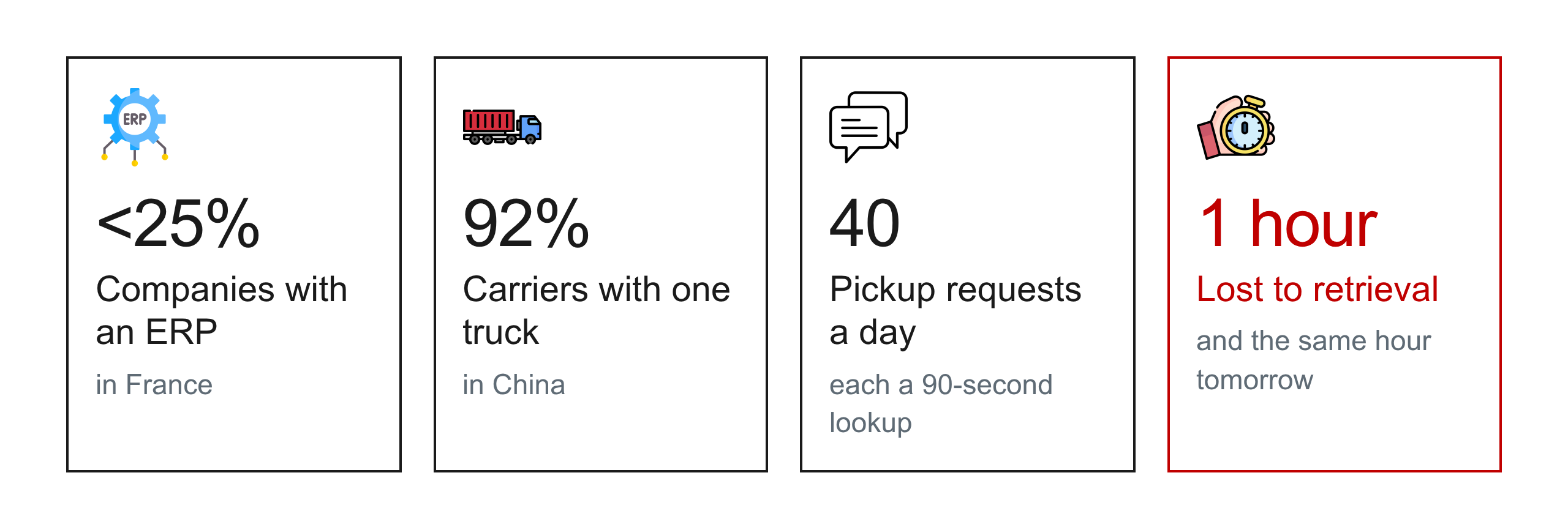
In France, less than 25% of companies have an ERP, and where I started my career in Asia Pacific it is worse: 92% of carrier companies in China have only one truck.
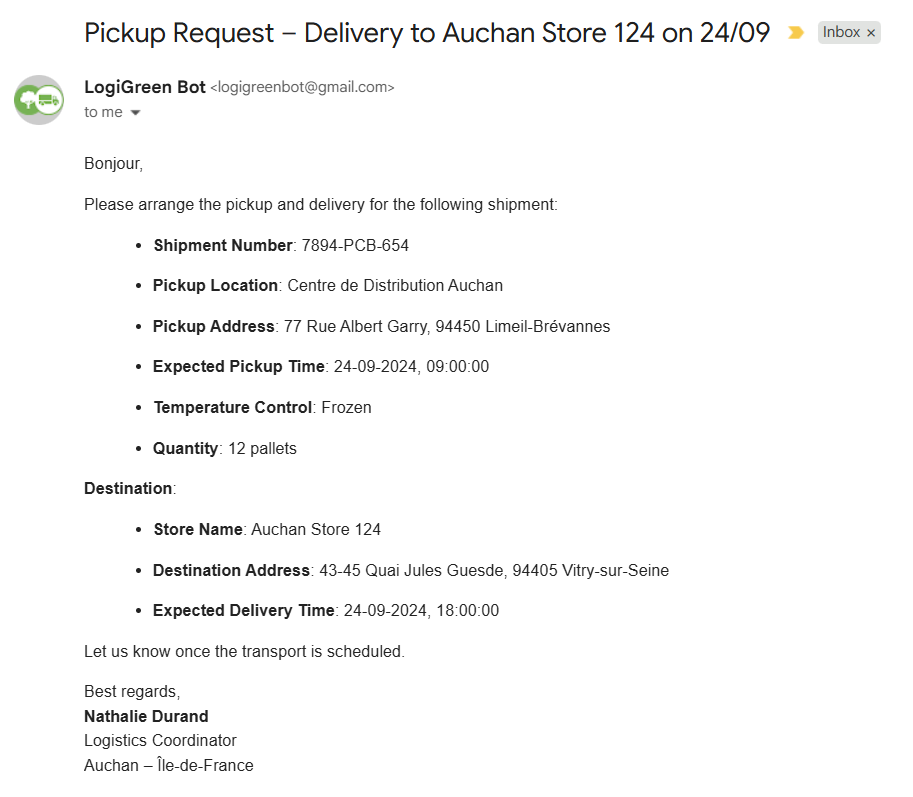
Pickup requests arrive by email, the dispatcher looks the address up on a map, guesses how long a truck will really take to get there, types it into a spreadsheet and writes the reply by hand.
A 90-second job is rarely worth escalating, but a dispatcher handling forty requests a day spends more than an hour on retrieval, and it is the same hour tomorrow.
That operation has nowhere for an agent that runs the company to plug into, and it has a dozen places where a small one earns its keep.
Where AI works in logistics today
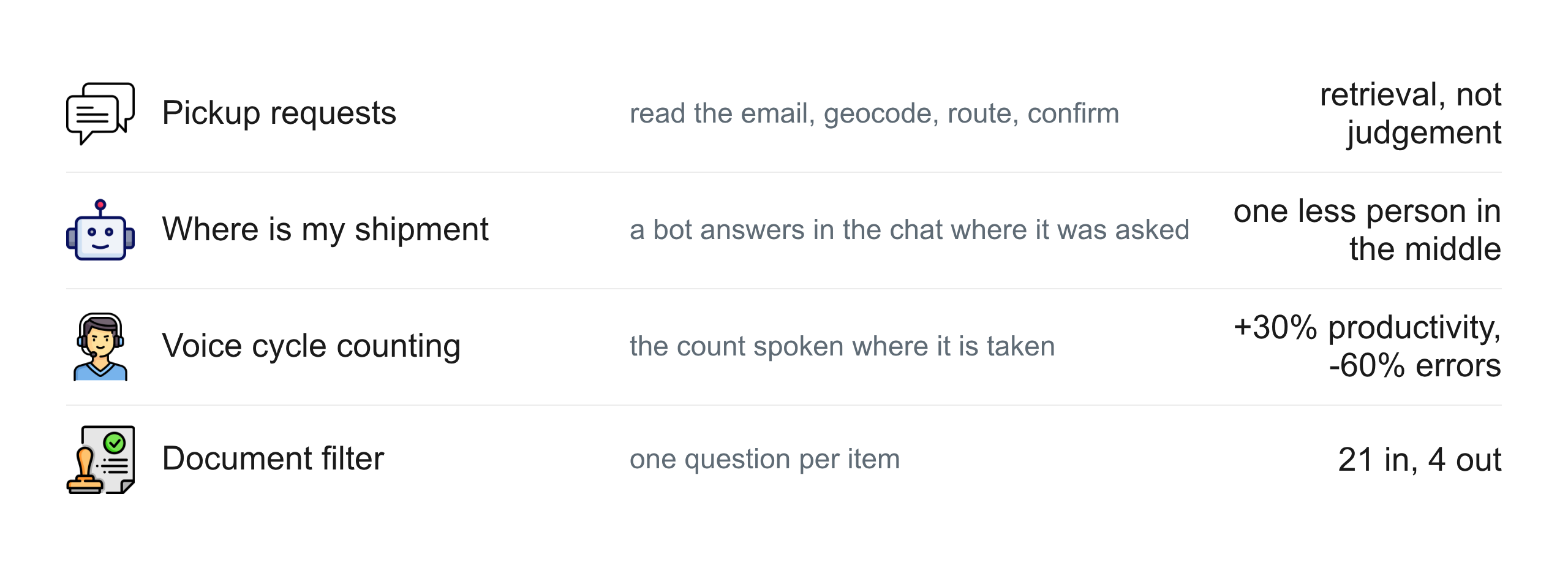
1. Reading pickup requests into confirmations
The workflow watches the inbox and hands the email to an agent that extracts the pickup and delivery addresses, the dates and the pallet count.
It geocodes the two addresses, calls a routing API for the real road distance and driving time for a heavy truck, and writes the confirmation back.
The dispatcher still decides which truck takes the job, because that decision needs the driver, the customer, and what happened last time.
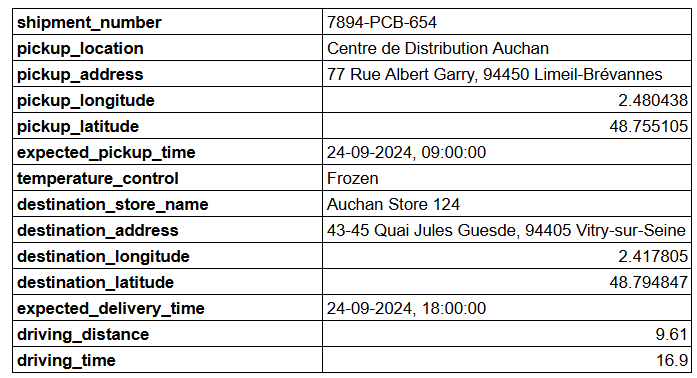
The build is in AI agents for supply chain optimisation with n8n, and the reason it survived is that it replaced retrieval, not judgement.
2. Answering "where is my shipment" without a person in the middle
Somebody asks where an order is, somebody else logs into a carrier portal or calls the carrier, and reports back, twenty times a day.
A bot in the team's messaging tool takes the shipment reference, queries the tracking source, and answers in the chat where the question was asked, which is the Telegram tracking tool I built for exactly that.

3. Voice on the warehouse floor
Cycle counting in most warehouses is a printed sheet, an operator walking the aisles, and a walk back to a computer to type the corrections.
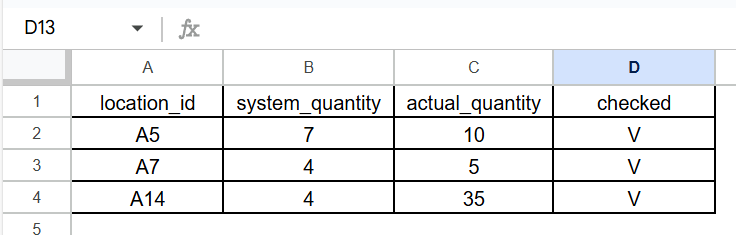
I replaced the paper with a voice workflow where the operator speaks the count at the location, and the ElevenLabs build removed the walk that carried no information.
Productivity rose about 30% and recording errors fell by about 60%, because the count is entered once, by the person who did it, at the moment they did it.
4. Reading a hundred documents a week down to four a day
We monitor European legislation for our sustainability work, and the first automation sent every item to our legal expert, well over a hundred documents a week.
A reading agent now answers one question per item, is this related to sustainability, and only the ones that pass become tasks with the reference attached: on the day I recorded it, twenty-one items came in and four came out.
The same shape produces a curated newsletter and a compliance summariser, and the sustainability agents all read rather than decide.
Every one of those four can be described in one sentence, none of them runs a supply chain, and each removes one named task from one named person's week, which is the reason each of them is still running.
The three places where it does not work
1. When there is nowhere to read from and nowhere to write to
A Swiss automotive plant asked for an AI agent to manage production planning.
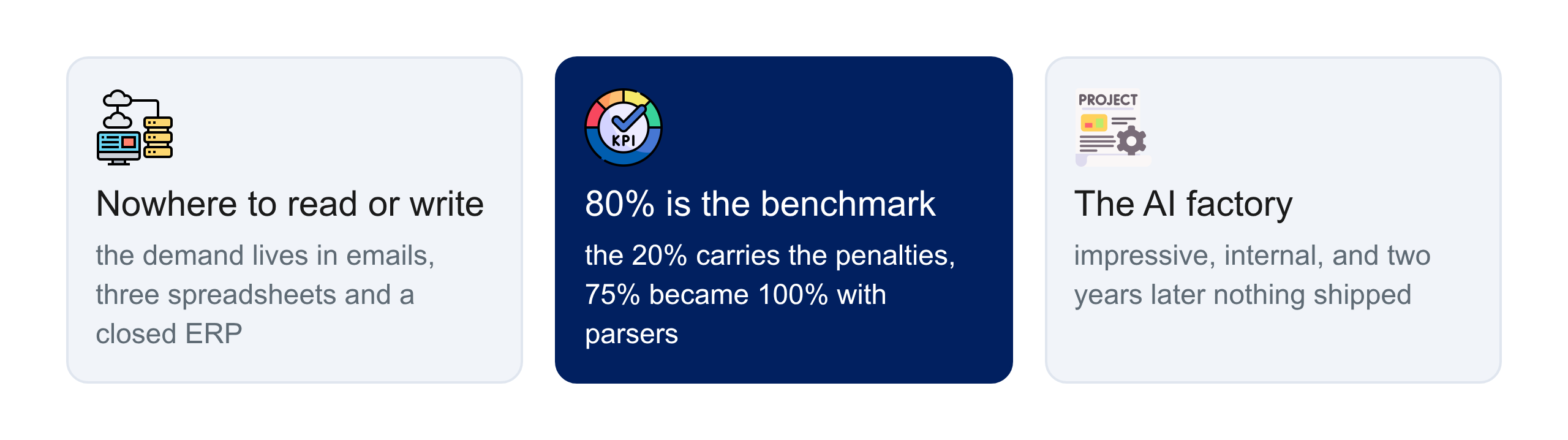
The demand the agent needed lived in emails, in three Excel spreadsheets with macros connected to a SharePoint file, and in an ERP that did not expose it.
Its output had to land somewhere real, a planning system, a file someone opens on Monday, or a printed board on the shop floor, and none of those existed either.
An agent needs a digital environment to act in, and plenty of operations do not have one yet.
This is not a new failure and it is not specific to agents, because it is why so many data science projects between 2018 and 2022 never left the notebook.
2. When 80% accuracy is the benchmark
People evaluate AI pilots the way they evaluate a machine learning model, and 80% sounds like a strong result, and in most industries it is one.
Logistics is not like most industries, because the 20% is where the penalties live, and a factory director will not accept a tool that gets one order in five wrong.
I learned this the expensive way on an EDI parsing project: the AI step read 75% of the messages correctly, and one parser per format, written in an hour and a half, read 100%.
Handling the exceptions is most of the job, and a spreadsheet survives because it absorbs the exception.
A mandated tool that cannot absorb the exception does not get adopted, it gets worked around.
3. When the AI factory never ships anything
Large companies respond by building an AI capability, a team of scientists, a platform, a roadmap, and a genuine amount of talent.
Two years later the output is impressive and internal, because the incentive was to be technically impressive rather than to reach production.
I would rather have four boring automations that survived a year of Mondays than one platform that demos well.
The order that ships
If your company is about to invest in AI for logistics, the sequence matters more than the choice of tool.
First, clean centralised data, with processes that are mapped rather than assumed, because what is supply chain analytics starts with a return path for the information and most operations do not have one.
Second, descriptive analytics, reporting that people trust and use, such as a control tower or operational dashboards.
Third, models, once there is something reliable to model.
Fourth, AI, on top of all of it, and starting with the reading tasks, because they are the ones with a person downstream and a wrong answer that costs a minute.
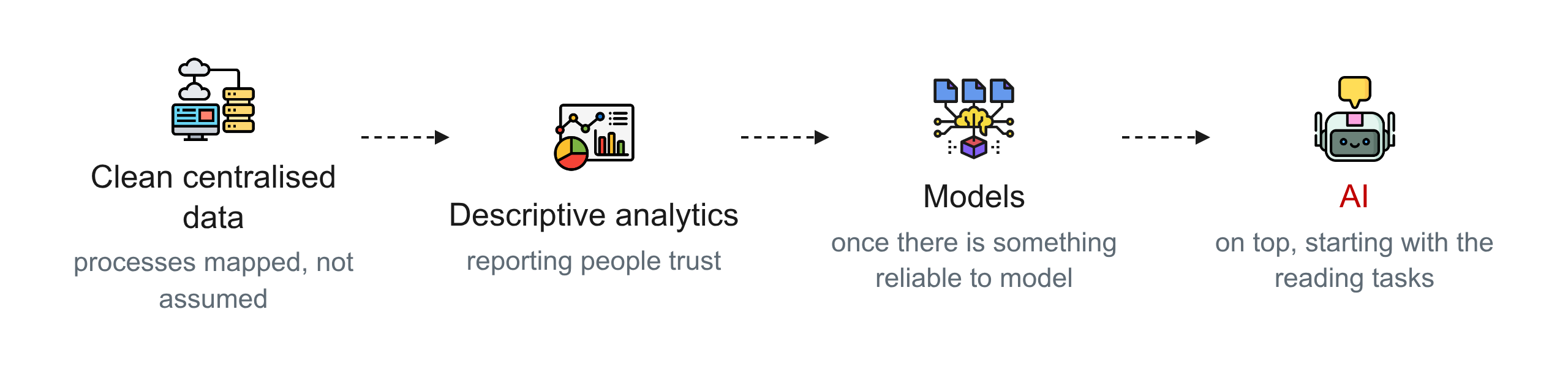
AI belongs on top of a base that already works, and most companies are still building the base.
The tooling for that fourth step is n8n rather than code for most logistics teams, because the person who will maintain it is a dispatcher rather than a developer.
Conclusion
AI in logistics works where it reads, classifies and answers in front of a person, and it fails where there is no data to read, where 80% is the benchmark, or where the goal was to be impressive.
What we covered in this article
Four automations that run: pickup requests, shipment tracking, voice cycle counting and document filtering. Three reasons projects get cancelled, and the four-step order that gets one into production.
Where to go next
The wider list of what a language model can do in an operation, including the control tower you can question in plain English, is in ChatGPT and LLMs for supply chain management.
If you would rather see the three builds than read about them, the video above walks through each with its template.
Related videos
The videos behind this article, already on the channel:
- AI Agents for Transportation Planning using n8n
- Create your AI Agent to Automate Logistics Workflows with n8n
- Build a Shipment Tracking Telegram Bot with Python (Source Code)
- The AI Took 5 Days: Adoption Took 10 Weeks
- We Built the Algorithm: The Planners Never Used It
- I Deleted the AI and the Automation Started Working
The ones coming next, with the date each goes public:
- They Loved the AI Agents: Two Weeks Later, Nobody Used Them, 21 September 2026
- Your AI Project Is Sitting on Five Systems That Don't Talk, 12 October 2026
- Connect Your Python Analytics API to Email with n8n (No Code), 26 October 2026
About Me
Let's connect on LinkedIn and Twitter. I am a Supply Chain Engineer who is using data analytics to improve logistics operations and reduce costs.