What Is a Supply Chain Digital Twin?
Use python to create a model representing your supply chain network to optimize your operations and support strategic decisions.
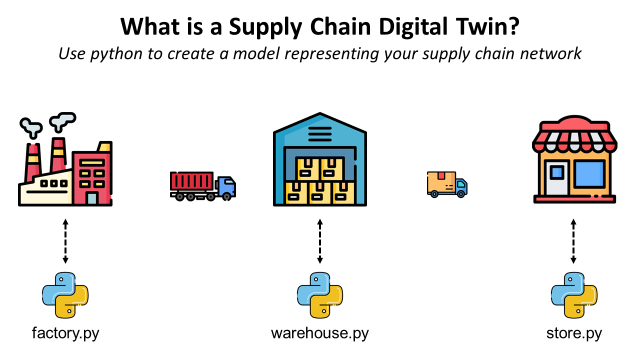
A digital twin is a digital replica of a physical object or system.
A Supply Chain digital twin is a computer model that represents the components and processes of the supply chain, including warehouses, transportation networks, and production facilities.
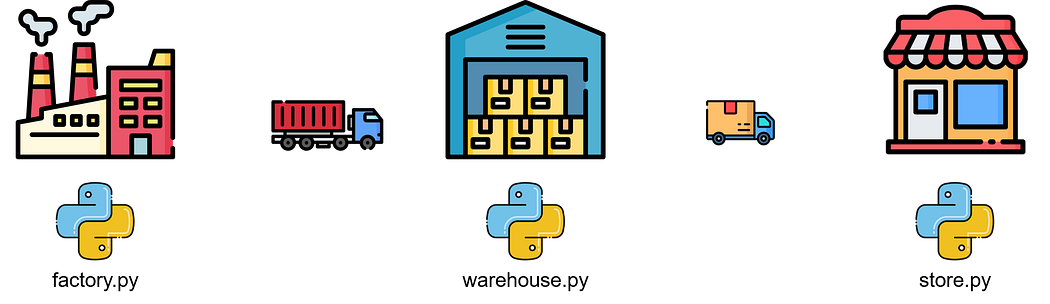
In previous articles, I shared examples of Python models designed for specific applications such as transportation routing optimisation, supply chain network design or production planning.
In this article, we will create a Supply Chain Digital Twin of your entire supply chain, from production to store delivery.
💌 New articles straight to your inbox for free: Newsletter
What is a Supply Chain Digital Twin?
A goal-oriented network
A supply chain is a goal-oriented network of processes and stock points used to deliver goods and services to customers.
To create a digital twin of a supply chain using Python, you would first need to define its components and processes.
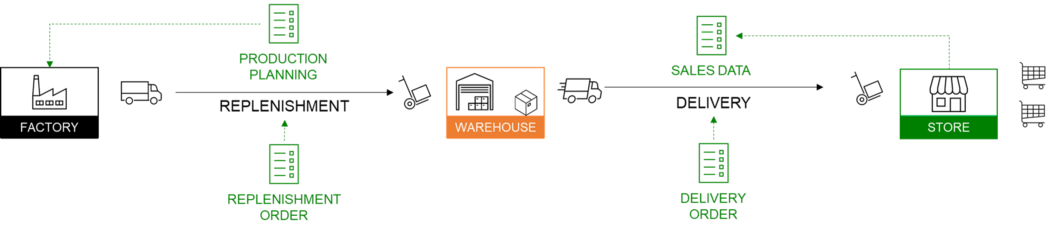
This could involve creating data structures to represent warehouses, transportation operations, and production facilities and defining the relationships between these components.
Data & parameters
Next, you would need to collect data on the various components and processes of the supply chain, such as
- locations and capacities of warehouses
- routes and capacities of transportation networks
- production rates of production facilities
- customer and store demand
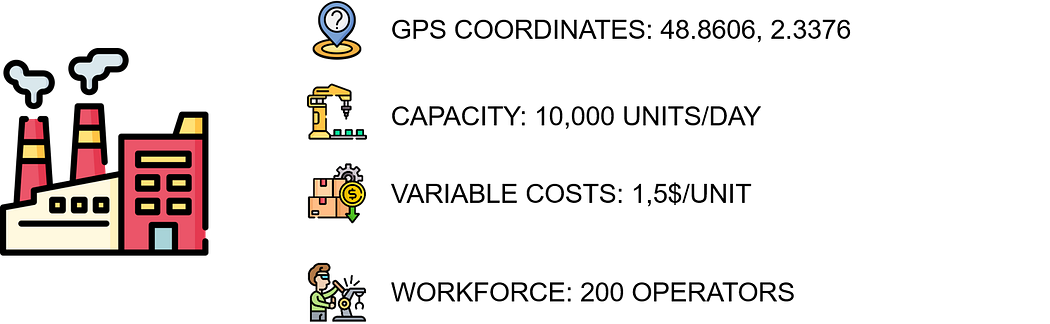
This data could be stored in databases or other data storage systems or directly connected to your warehouse management systems and ERP.
Simulation blocks
Once you have data on the supply chain components and processes, you can use Python to build algorithms and simulations that replicate the supply chain's behaviour.
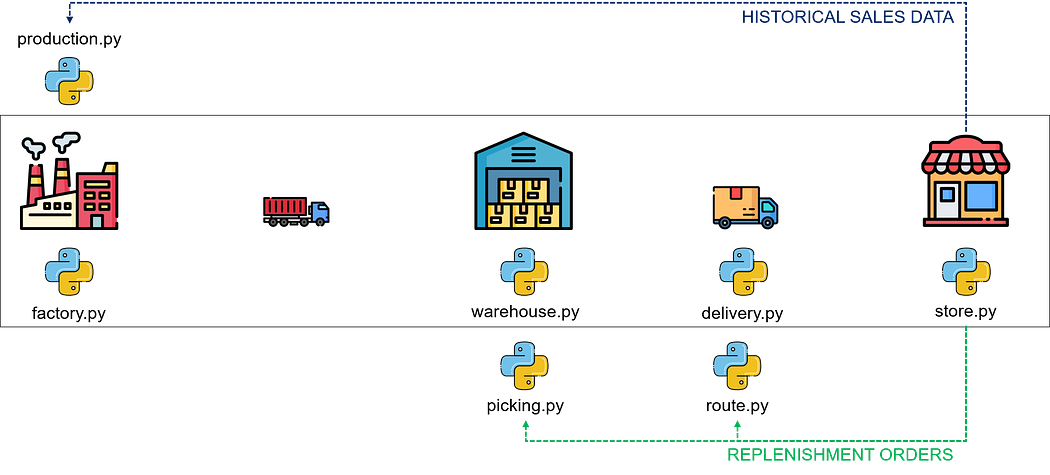
This could involve using optimisation algorithms to
- Determine the most efficient routes (output) to deliver stores using replenishment orders (input) coming from the store model
- Improve the picking processes (output) in your warehouse to prepare store replenishment orders (input)
- Schedule your production (output) based on demand forecasts built with the stores’ sales historical data (input)
Examples of building blocks
Overall, creating a supply chain digital twin with Python would involve a combination of data collection and analysis, algorithm development, and simulation modelling.
It would likely require a deep understanding of supply chain management and experience with Python programming.
Let us take three examples of elementary blocks built with Python.
How to simulate warehouse operations?
We define a warehouse class as one that has attributes for the warehouse’s location, capacity, and inventory.
The add_inventory and remove_inventory methods can add and remove items from the warehouse’s inventory, respectively.
This is a simple example.
You can add additional attributes and methods by considering processes' productivity, warehouse cost structure, workforce management, or picking processes to improve the model.
How to simulate road transportation?
We define a Truck class that has attributes for the truck’s location, capacity, and load.
The move_to method can be used to move the truck to a new location, and the load_cargo and unload_cargo methods can be used to load and unload cargo, respectively.
The solution above can be improved by adding loading and unloading times, timestamps for lead-time calculations, costing parameters, or by detailing the handling units (pallets, cartons, …).
How to simulate store inventory management?
We define a Store class that has attributes for the store’s location and inventory.
The place_order method can be used to place an order for a given item and quantity.
- If the store has enough of the item in inventory, the order will be fulfilled, and the inventory will be updated accordingly.
- Otherwise, an error message will be printed.
You can improve it by adding the requested delivery date and by managing multiple handling units, including outbound sales and lead times.
Next Steps
Connect the blocks
Now that you have built your elementary independent blocks, you need to connect them:
- Your store is sending replenishment orders to the warehouse management system using the ERP.
- Your warehouse prepares the orders, packs the items and puts them on pallets.
- Pallets are loaded in a truck
- The truck delivers the pallets to the store
And add external parameters such as customer demand or raw materials supply constraints.
Supply Chain Analytics
Now that you have a replica of your supply chain, you can experiment with the parameters and use the data to run simulations.
Descriptive Analytics: monitor your processes with dashboards and visuals
Diagnostic Analytics: automate root cause analysis processes
- Logistic Performance Management Using Data Analytics
- Lead Times Variability and Supply Chain Resilience
Predictive and Prescriptive Analytics: add forecasting and optimisation models into your digital twin to improve ordering rules or planning
- Machine Learning for Retail Sales Forecasting — Features Engineering
- Production Fixed Horizon Planning with Python
- Optimize Warehouse Value Added Services with Python
- Improve Warehouse Productivity using Pathfinding Algorithm with Python
- Machine Learning for Store Delivery Scheduling
For more details,
Your digital twin can be seen as a core model in which you can add models that solve specific issues.
Example of a Digital Twin
An example of our implementation was the solution we built for Green Inventory Management.
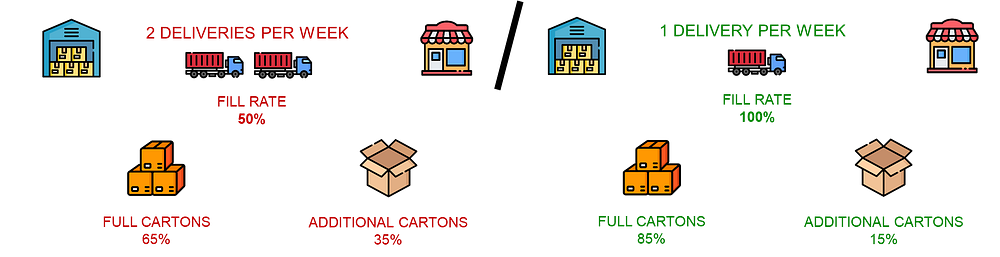
We simulated the distribution chain of a fashion retailer (Warehouse, Stores, and Transport) to assess the impact of delivery frequency on CO2 emissions, costs, and waste generation.
This was the occasion to use AI Agents to improve the quality of our insights.
About Me
Let’s connect on LinkedIn and Twitter. I am a Supply Chain Engineer who is using data analytics to improve logistics operations and reduce costs.
If you’re looking for tailored consulting solutions to optimise your supply chain and meet sustainability goals, feel free to contact me.