Business Optimisation
Businesses must continuously find new strategies to maximise efficiency and reduce operating costs to boost profitability.
How can we use data analytics to optimise our value chain from manufacturing to sales channels?
Thus, leveraging data analytics for business planning and optimisation can provide valuable insights and drive informed decision-making.
In this section, you can find articles (written by a supply chain data scientist) on utilising data analytics to optimise various aspects of business operations.
🏪 Data Analytics for Business Decision-Making
How can data analytics help small businesses improve revenue, manage resources effectively and maximise profitability?
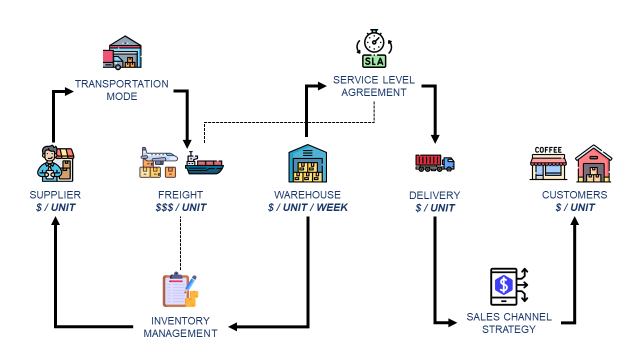
These articles provide practical insights into using data analytics to make informed decisions and improve overall business performance.
Sustainable Business Practises
Reduce Costs & Maximize Profitability
- 💰 Business Planning with Python — Revenue Optimization
- 📦 Business Planning with Python — Inventory and Cash Flow Management
- 🍞 Maximize your Business Profitability with Python
Optimal Budget Planning
Data Visualisation for Decision Making
🤖 Automate Transactional Tasks
Use Python or VBA to automate manual recurring tasks required to run your business.
Accounting
Procurement Management