Automate Budget Planning Using Linear Programming
Select the projects that maximize the return on investment, follow the management guidelines while respecting budget constraints
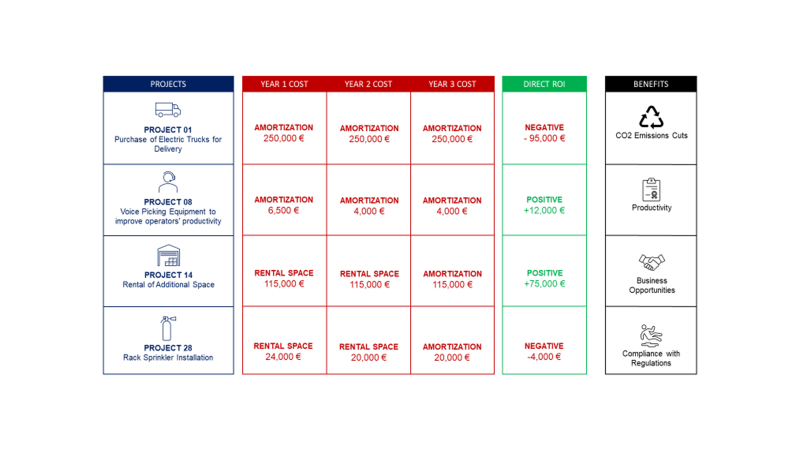
Automate the decision-making process for the yearly budget allocation of an International Logistics Company.
In the Logistics industry, companies often need to invest in IT capabilities, modern handling equipment or additional warehouse space.
Regional Operational Directors receive budget applications from their local teams for mid-term projects.
Because of budget constraints, they need to decide for which projects the organization will allocate resources.
Spending money is much more difficult than making money.
— Jack Ma, Co-founder of Alibaba Group
In this article, we will design a simple linear programming model with Python to automate this decision-making process, considering
- Return on investment of each project after three years (€)
- Total costs and budget limits per year (€/Year)
We will also include the company’s top management guidelines for…
- Sustainable Development (CO2 Reduction)
- Digital Transformation (IoT, Automation and Analytics)
- Operational Excellence (Productivity, Quality and Continuous Improvement)
💌 New articles straight to your inbox for free: Newsletter
I. Scenario: Budget Planning Process
As a Regional Director you need to allocate your budget on projects
II. Build your Model
1. Exploratory Data Analysis
Analyze the budget applications received
2. Linear Programming Model
Decisions variables, objective function and constraints
3. Initial Solution: Maximum ROI
What would be the results if you focus only on ROI maximization?
4. Final Solution: Management Guidelines
III. Conclusion & Next Steps
If you prefer watching, have a look at the YouTube tutorial
Scenario
Problem Statement
As a Regional Director of an international logistics company, you have the responsibility for logistics operations in four countries.
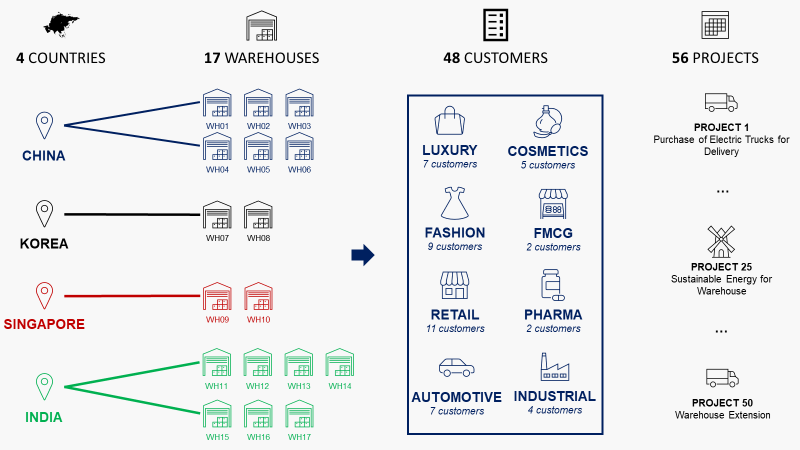
Your teams manage operations for 48 customers across more than 8 market verticals (Luxury, Cosmetics,…).
For each of the 17 warehouses, the Warehouse Manager (reporting to you) lists all projects requiring Capital Expenditure (CAPEX).
In an application form, he puts all the information that can help to justify (financially) this investment
- To which customer this project will benefit?
- What are the estimated costs per year (M€)?
- What is the estimated return on investment after 3 years (M€)?
He can also add all the non-financial outcomes linked to the company’s long-term strategy.
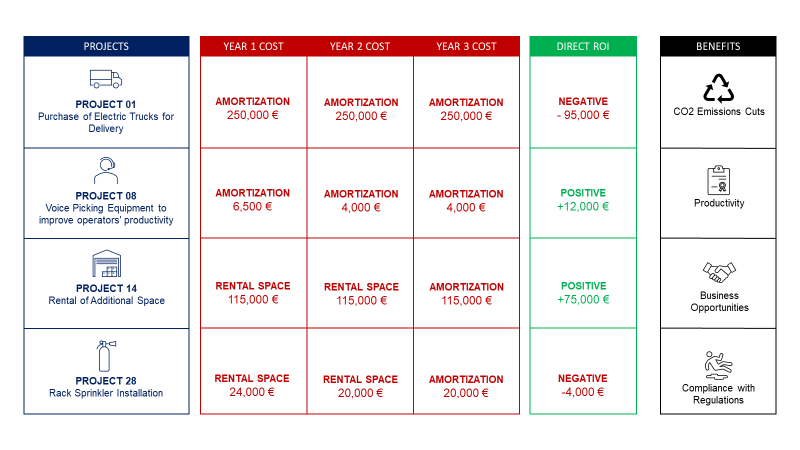
For instance, a project can contribute to initiatives for sustainable development, corporate social responsibility (CSR) or digital transformation.
Objective
Find the right budget allocation that maximises your profits (ROI) and respects the guidelines of the top management.
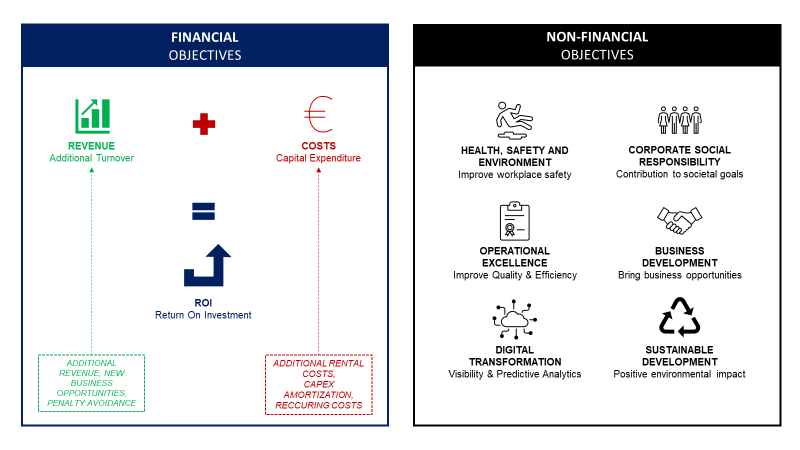
Because you have 58 projects under your responsibility, let us build a simple tool to automate this decision-making process.
Build your model
We will use the PuLP Python library, a modelling framework for Linear (LP) and Integer Programming (IP) problems.
Exploratory Data Analysis
For this year, you have a total of 58 projects covering 9 vertical markets.
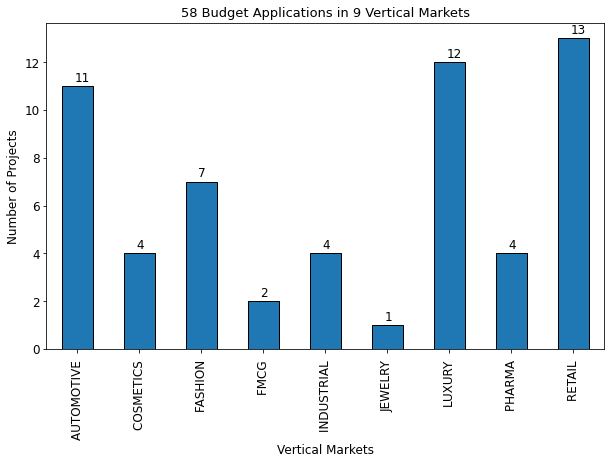
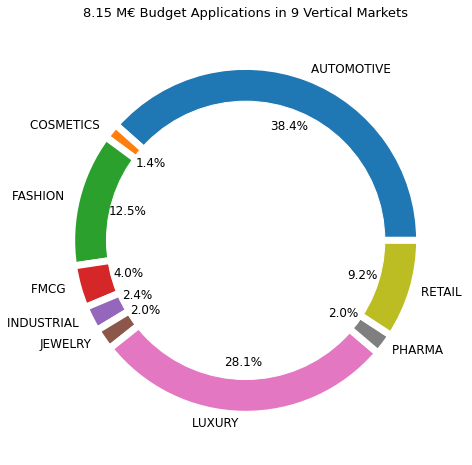
Automotive and Luxury markets represent a large part of the budget allocations because of the warehouse extension projects.
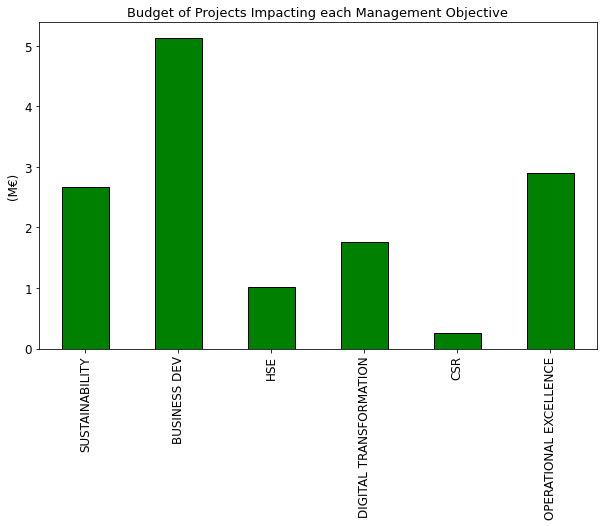
A majority of the projects are related to Business Development i.e bringing additional turnover (and profit) for the company
Linear Programming Problem
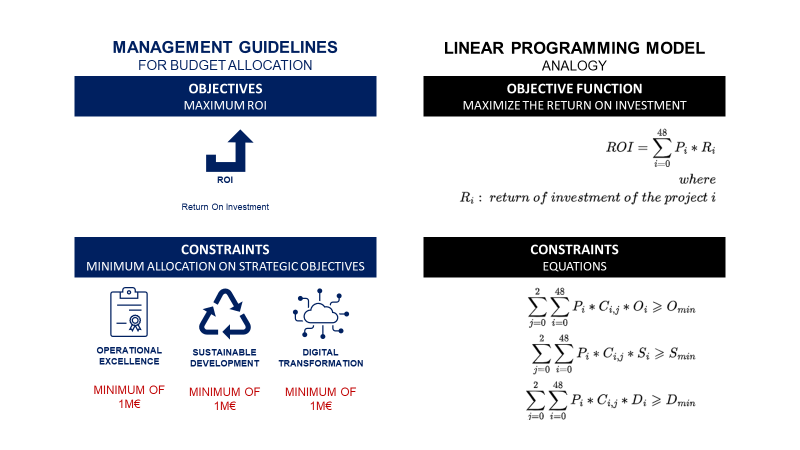
Let us build a model using the analogy with this process and the definition of a linear programming model.
Decision Variables

Objective Function
Your objective is to maximise the total return on investment of the portfolio of projects you selected

Budget Limitations (Constraints)
You have a budget of 4.5 M€ that you split into three years (1.25M€, 1.5M€, 1.75M€).

Strategic Objectives (Constraints)

We will fix the minimum budget at 1M€ for the three key pillars.
Initial Solution: Maximise the ROI
In order to understand the added value of this model, let‘s have a look at what would be the allocation if we remove strategic objectives constraints.
The results are satisfying with a good ROI and more than 80% of the budget allocated.
What about the allocation by strategic objectives?
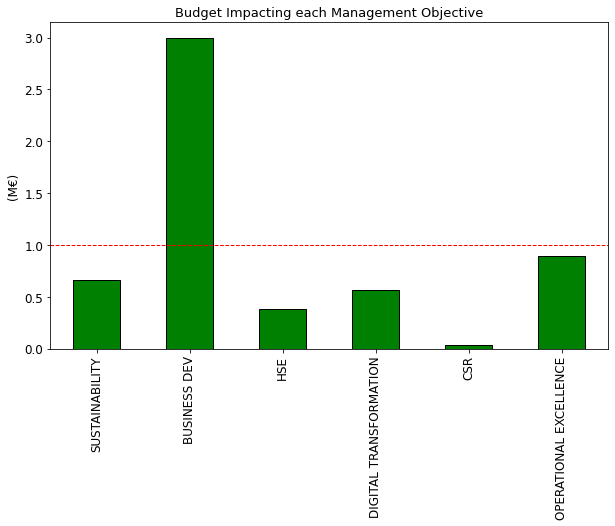
When you ask the model to focus on profitability, you do not reach the management targets.
Final Solution
If we have the requirements of minimum budget allocation for the key pillars of the company’s long-term strategy:
The return on investment is slightly impacted.
What about the management targets?
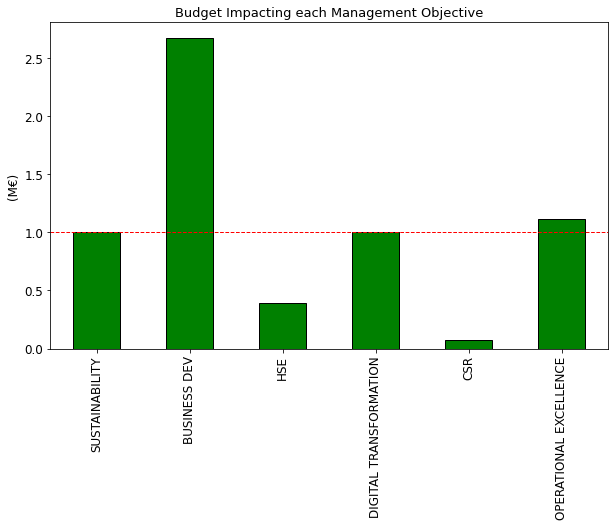
The management guidelines are respected.
Conclusion
This simple model provides the capacity to automate decision-making while ensuring allocation compliance.
It can be easily improved by adding constraints on
- Maximum budget allocation per country, market vertical or warehouse
- Budget allocation target (95% of the budget should be allocated)
This script can be implemented connected to an AI Agent to support the analysis of multiple scenarios and decision-making.
This is exactly what I did here,
 Samir Saci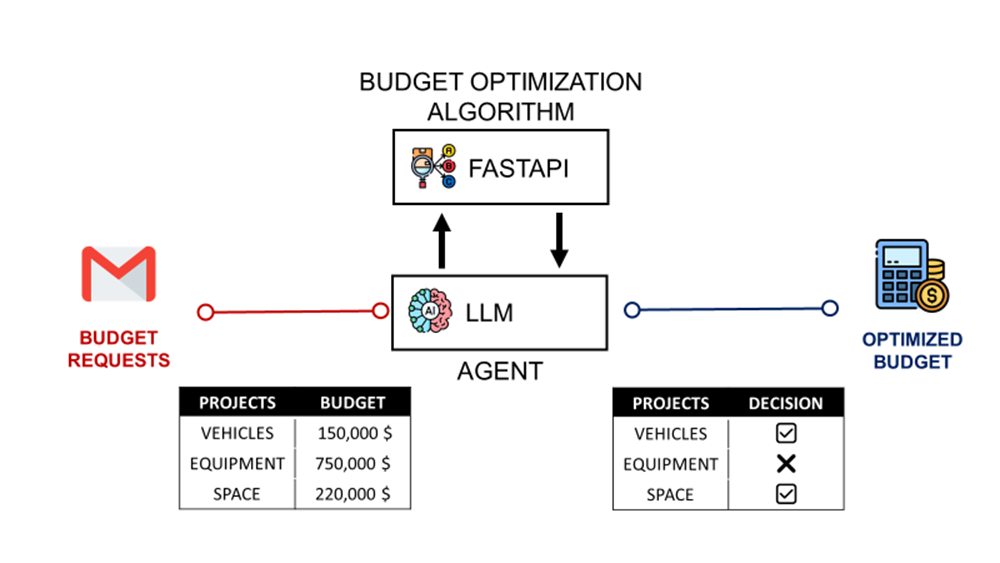
Where to go next
- Linear Programming in Supply Chain Management: Five Problems and the Code to Solve Them: The three-part recipe every supply chain optimisation reduces to, and five problems solved with it in Python: network design
- Supply Planning using Linear Programming with Python: Where do you need to allocate your stock to meet customers demand and reduce your transportation costs?
- Supply Chain Process Optimization Using Linear Programming: Understand how linear programming can be the most powerful tool for a supply chain continuous improvement engineer.
Related videos
The videos behind this article, already on the channel:
About Me
Let’s connect on LinkedIn and Twitter, I am a Supply Chain Engineer that is using data analytics to improve logistics operations and reduce costs.
If you’re looking for tailored consulting solutions to optimize your supply chain and meet sustainability goals, feel free to contact me.